ZaroStudy

Connect the Dots

Lessons guide you through 3–5 connected teaching sections, with a guided check exactly where it helps the idea click.
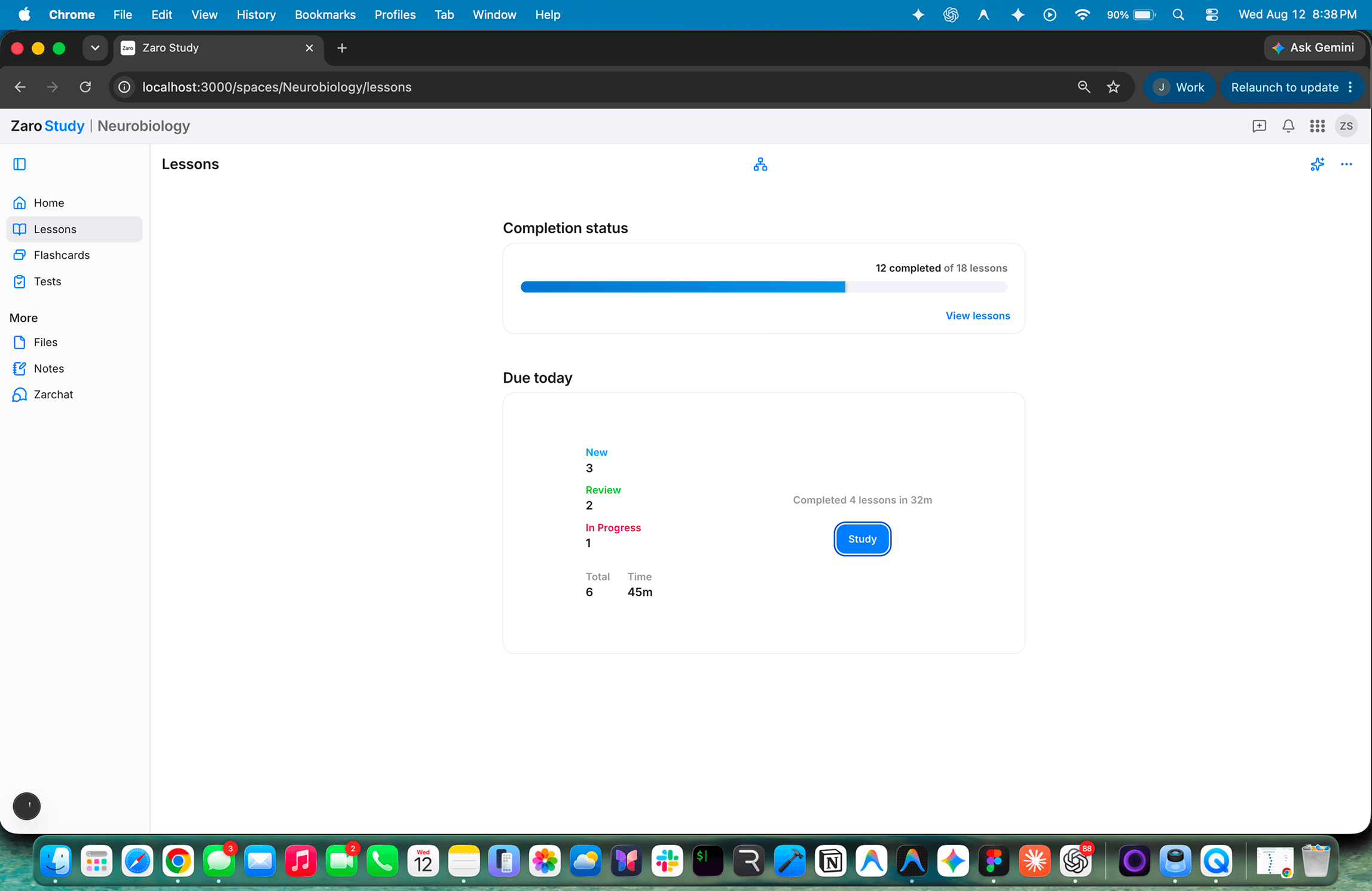

At a glance.

More power to you.

One lesson.Three clear parts.

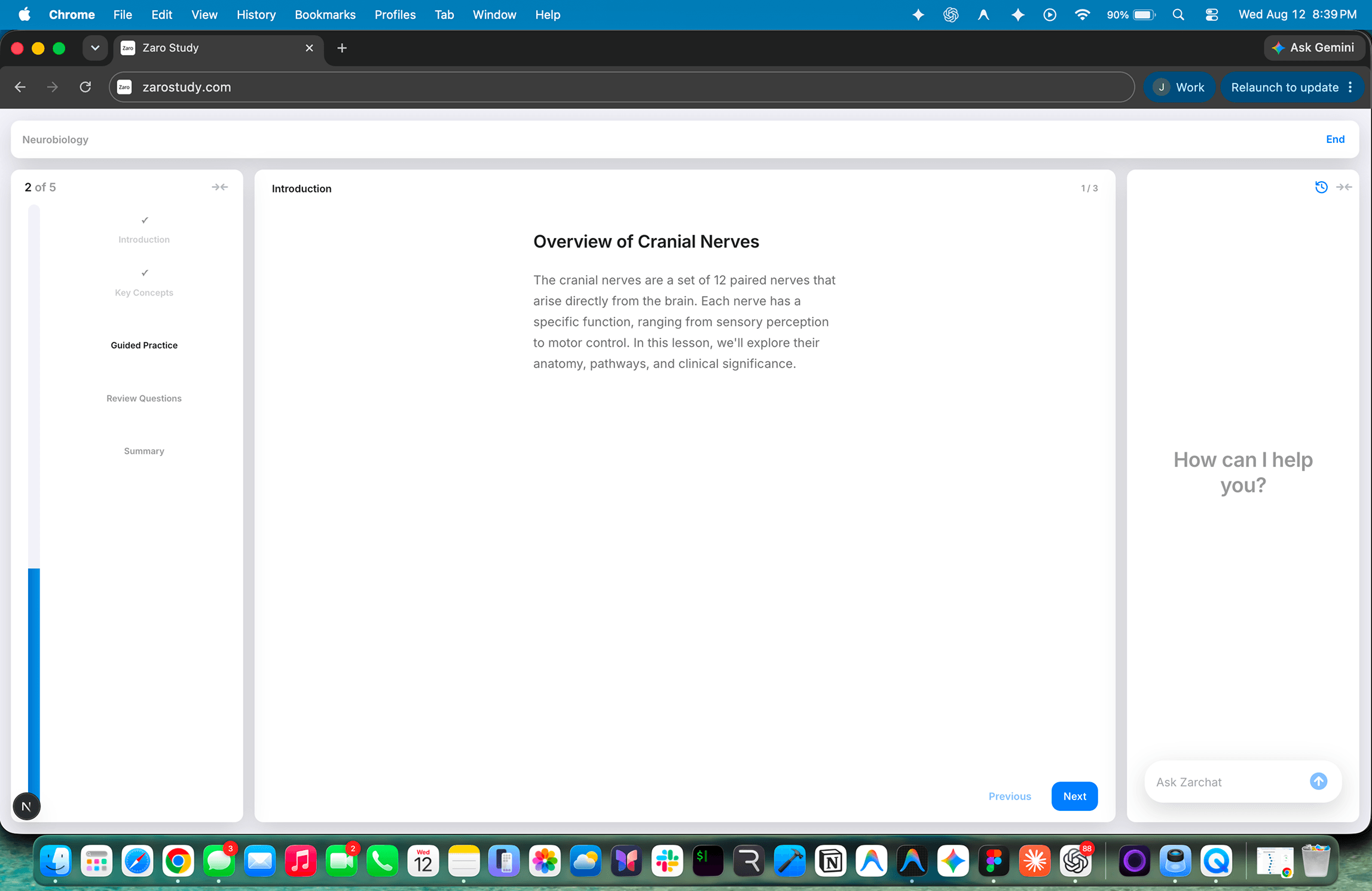
  1. The introduction gives you context: what the topic is, why it matters, and the questions to keep in mind as you begin.
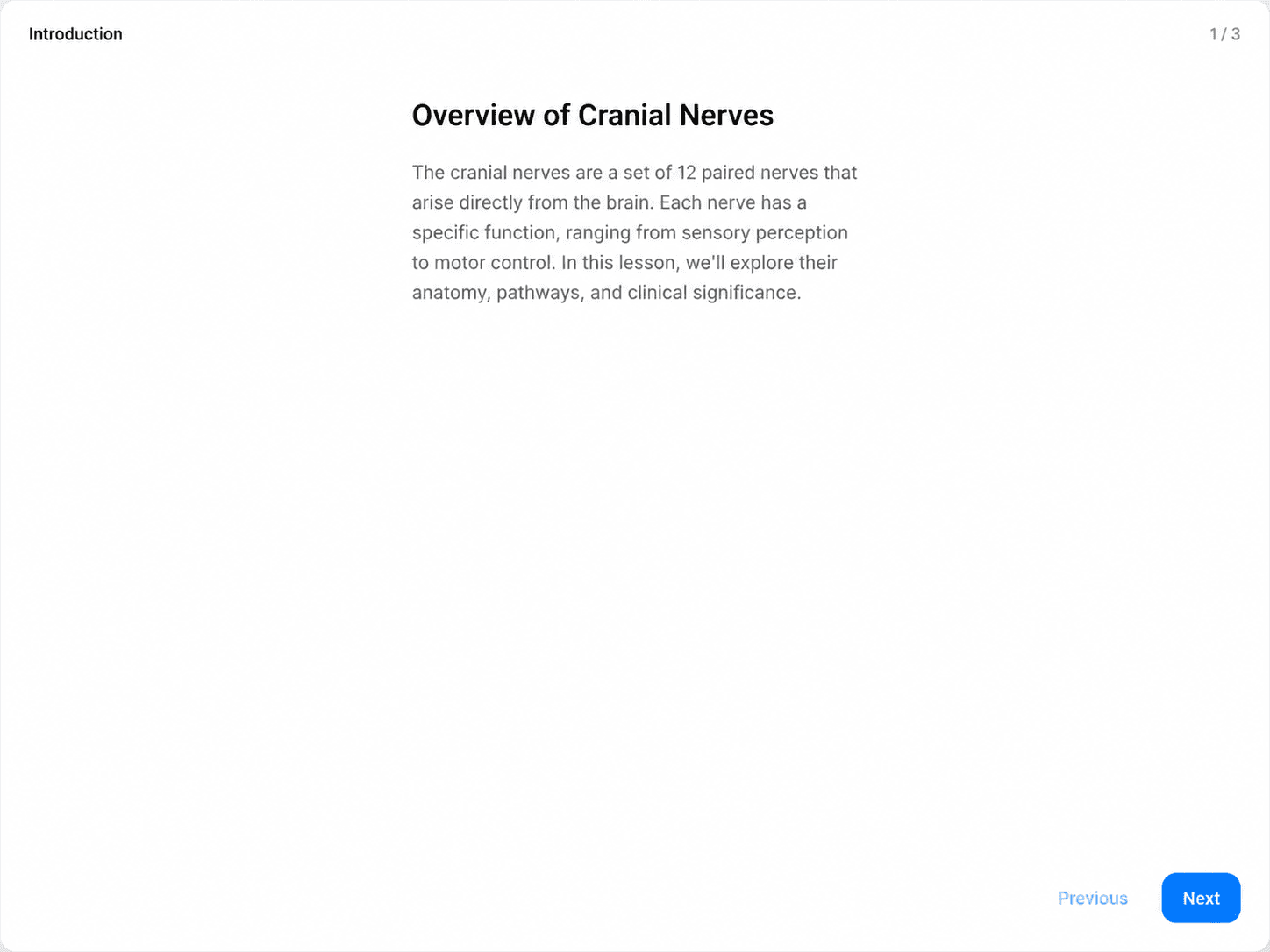
    Lesson introduction: an overview of cranial nerves and what the lesson will explore.
  2. The learning portion explores the core concepts through clear explanations and examples. It can span several sections, with a short check when it helps an idea click.
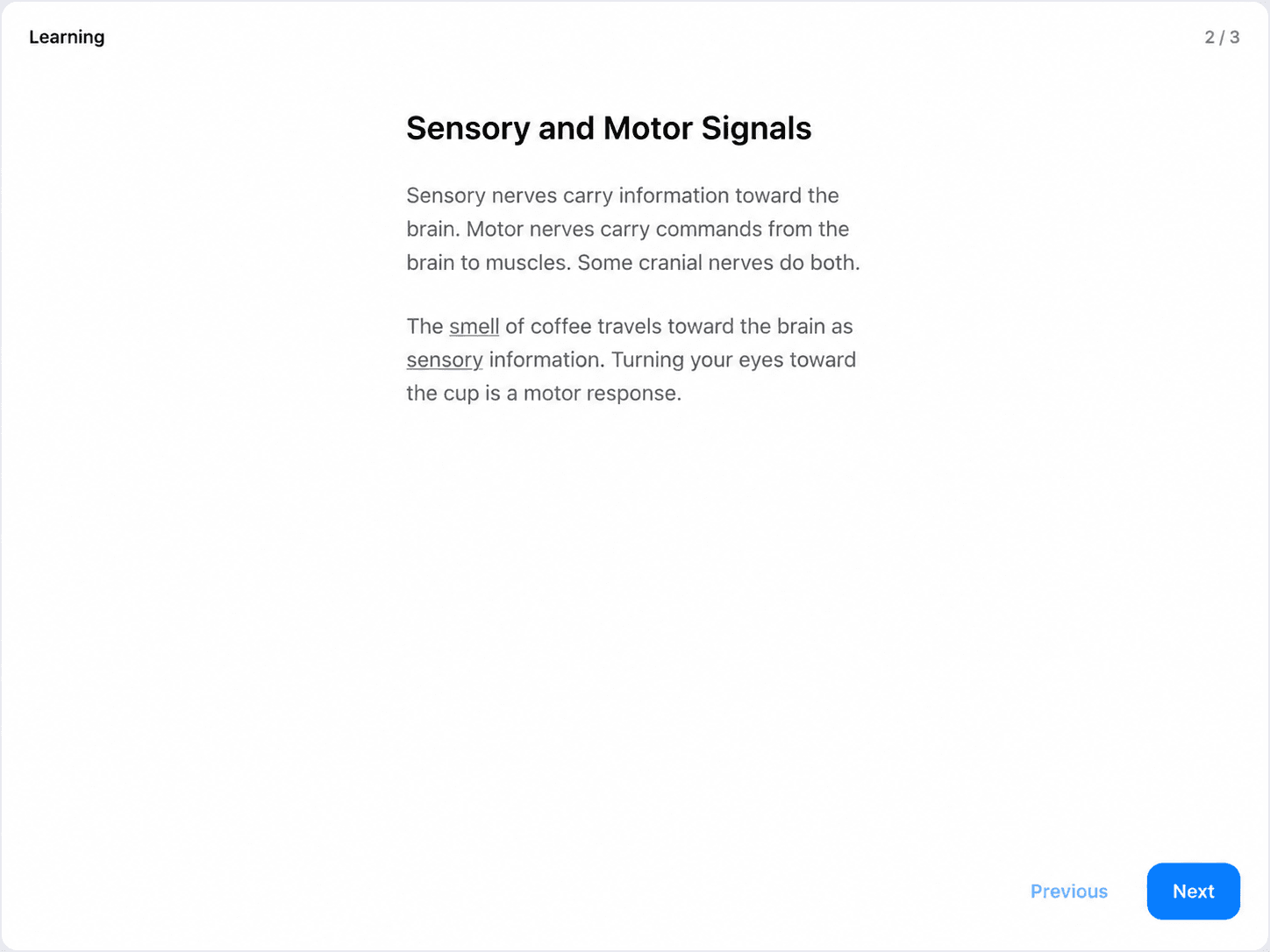
    Lesson teaching section: sensory and motor signals explained with the example of smelling coffee and turning toward it.
  3. The conclusion brings the ideas back together in a concise recap, so you leave with a connected picture of what you learned.
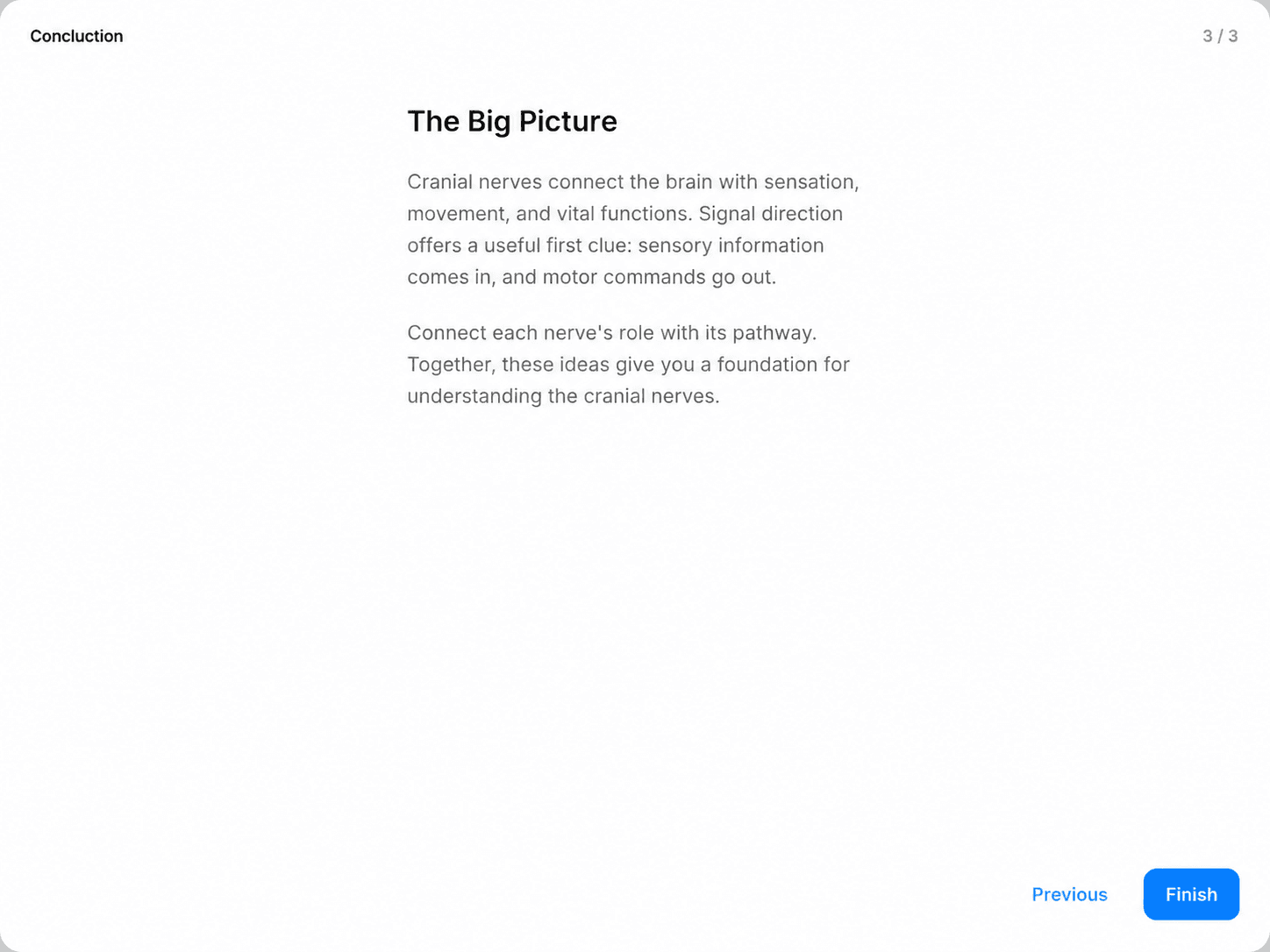
    Lesson conclusion: a recap connecting cranial nerve roles and the direction of sensory and motor signals.
A guided Zaro Study lesson about the cranial nerves
Study

Every section.There for a reason.

Study turns each primer into 3–5 learner-paced teaching sections. You begin with orientation, build understanding through explanations and examples, use an inline guided check when it helps, and finish with a recap.
Orientation — Find the big picture. Begin with what the idea is, why it matters, and the few anchors worth noticing. Unfamiliar material has somewhere to land before detail arrives.
Explanation & example — Build understanding. Move through clear teaching and a useful example. When a guided check appears, it sits below the explanation it uses and offers a hint instead of grading you.
Recap — Connect the anchors. Reconnect only the ideas already taught. You leave with a useful mental model and a clear bridge to detailed recall or later practice.
Know why this section matters. The current objective and its place in the lesson stay visible, so you always understand what you are doing and what it is helping you learn.
See the path ahead. The lesson map shows what is complete, what you are working through, and what remains. Pause when you need to and return without losing your place.
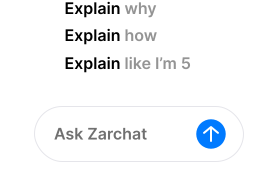
Ask without leaving the lesson. Zarchat already knows the section and the source material behind it. Ask for a hint, another example, or a clearer explanation while your learning context stays intact.

Explore our features

Guided by our values

Be Curious.